
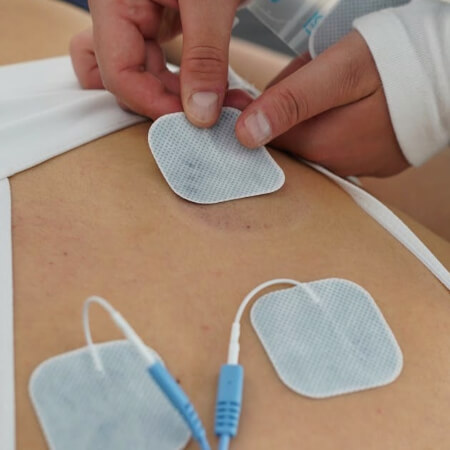
Interferential Current Therapy (E-Stim) in Fishers
If pain, muscle tension, or spasm is making it hard to move comfortably, we may suggest adding interferential current therapy—commonly called IFC or e-stim—to your care plan. It’s a quick, noninvasive treatment that uses gentle electrical currents delivered through pads placed on the skin. At About Life Chiropractic, we don’t use it on everyone; we bring it in selectively, when we think it can genuinely help manage pain or loosen tension as part of your overall care.
How IFC Works
We place small adhesive electrodes around the area we’re treating. Two electrical currents travel through the tissue and cross paths, and that intersection creates the therapeutic effect. Because IFC uses medium-frequency currents, most patients find it comfortable, even when we’re covering a larger area.
When We Might Recommend It
We’ll often bring up IFC when pain, tension, or spasm is limiting your movement or adding to your discomfort. In our office, that tends to show up as:
- Neck, back, or shoulder discomfort
- Tight or tense muscles
- Acute muscle spasm
- Recent injuries or flare-ups
- Areas where pain is getting in the way of movement
That said, IFC isn’t something every patient or condition calls for. We only recommend it when we believe it will actually add value to your care.
What a Session Feels Like
After the pads are in place, we slowly increase the intensity until you feel a noticeable but comfortable sensation. Patients usually describe it as a gentle tingling, buzzing, or pulsing. You’re welcome to ask us to adjust it at any time, and it should never feel painful. A typical session lasts about 10 minutes.

Frequently Asked Questions
How is IFC different from a TENS unit?
How many sessions will I need?
See If E-Stim Is Right for You
If muscle tension or pain has been making everyday movement harder than it should be, IFC might be a good addition to your care. We’re happy to walk you through how it works and whether it makes sense for you.
